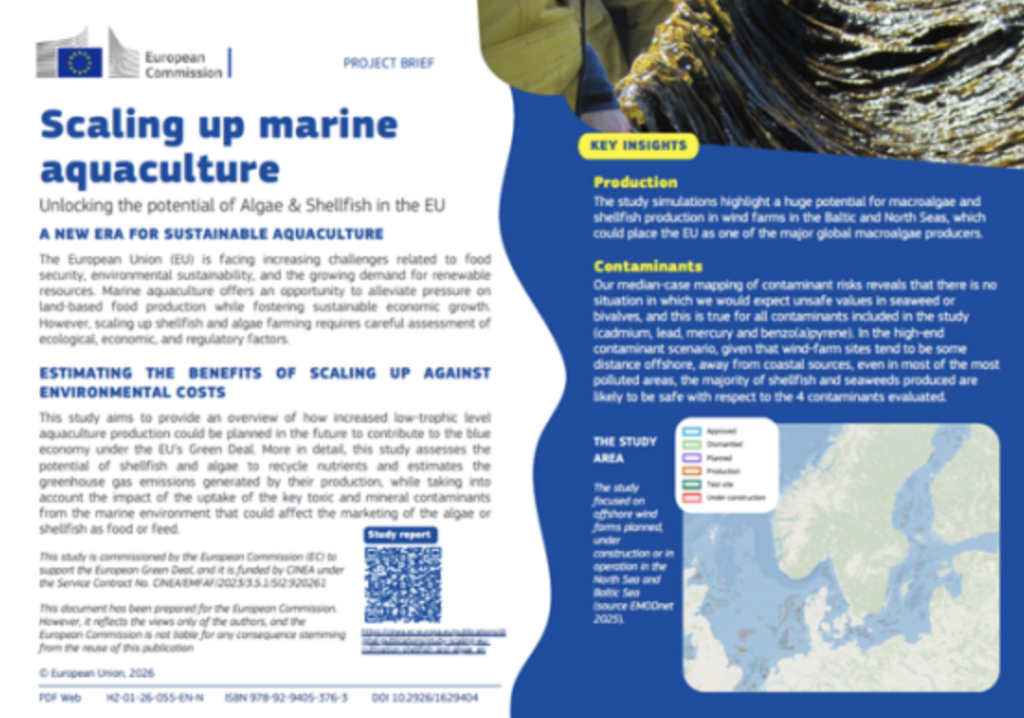

Are we tapping into the full potential in Europe?
A new European study shows how scaling up algae and shellfish cultivation could be beneficial for citizens, businesses and the environment alike.
With growing pressure on land-based food systems, low-impact aquaculture offers a reliable, local and low-carbon source of nutrition. Shellfish and algae require no feed, help clean our waters by absorbing nutrients, and can support coastal economies through new jobs and value chains.
The study explores how to scale this potential, including in offshore wind farm areas. It models production, environmental impacts and economic viability, offering a clearer pathway for industry and policymakers.
Some key findings:
➡️ Smart placement of farms is essential to maximise yields and avoid local nutrient depletion
➡️ Algae cultivation can absorb significant carbon, while shellfish production remains lower in emissions than land-based protein
➡️ Environmental impacts are manageable at large scale when properly planned
➡️ Contaminants and food safety must be carefully monitored for market uptake
➡️ Integrating aquaculture with offshore energy can unlock new space and business opportunities
Access the full study here and see the policy brief below 👇
https://lnkd.in/exA9UpQ4
Seaweed and shellfish farms could remove nutrients, reduce emissions and produce food.